
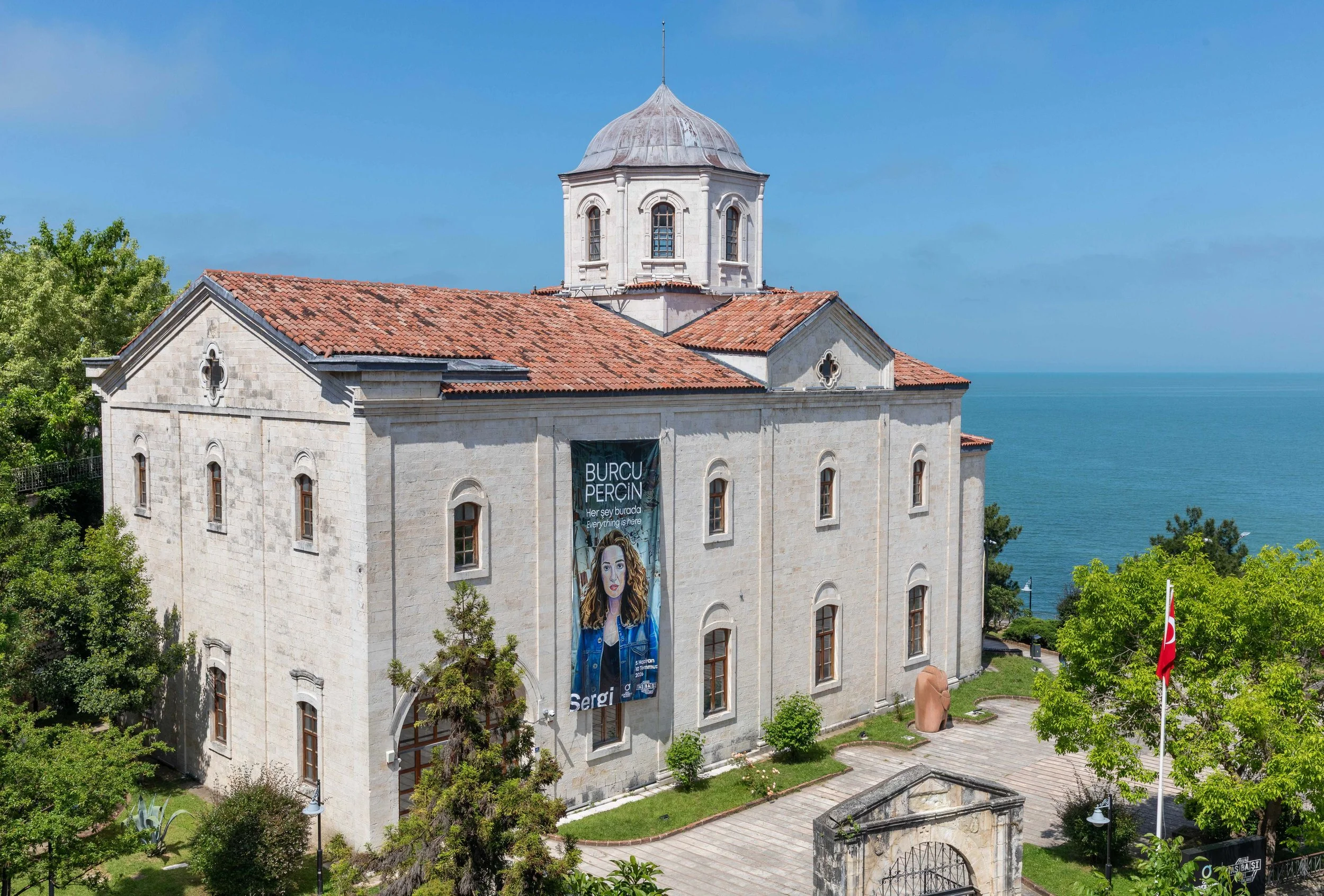
Everything is here
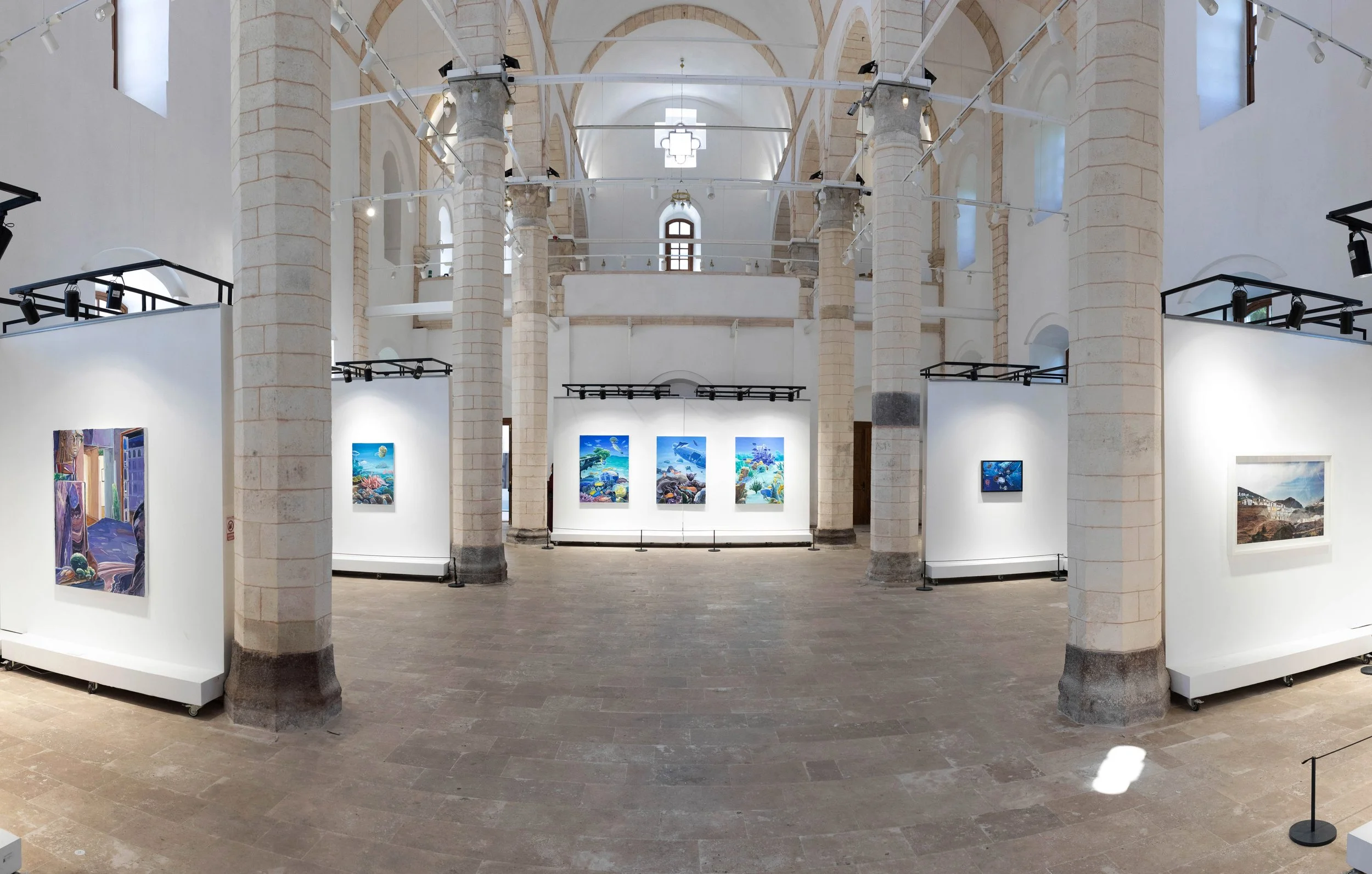
When viewed as a whole, different periods and themes reveal themselves as various unfoldings of a single line of thought. This exhibition can be read as a selection that brings together the reappearance, again and again, of a way of seeing that has evolved over the years through different intensities and changing visual languages. As the title suggests, everything that is here is not only a coexistence, but also a continuity.
The paintings trace the relationship between humans and nature; however, they do so not by constructing a direct narrative, but by placing side by side the layers that have accumulated over time.
The abandoned spaces, deserted structures, and industrial remnants encountered in the early works are considered through the traces left behind by human intervention. These places continue to carry the traces of human presence even in its absence.
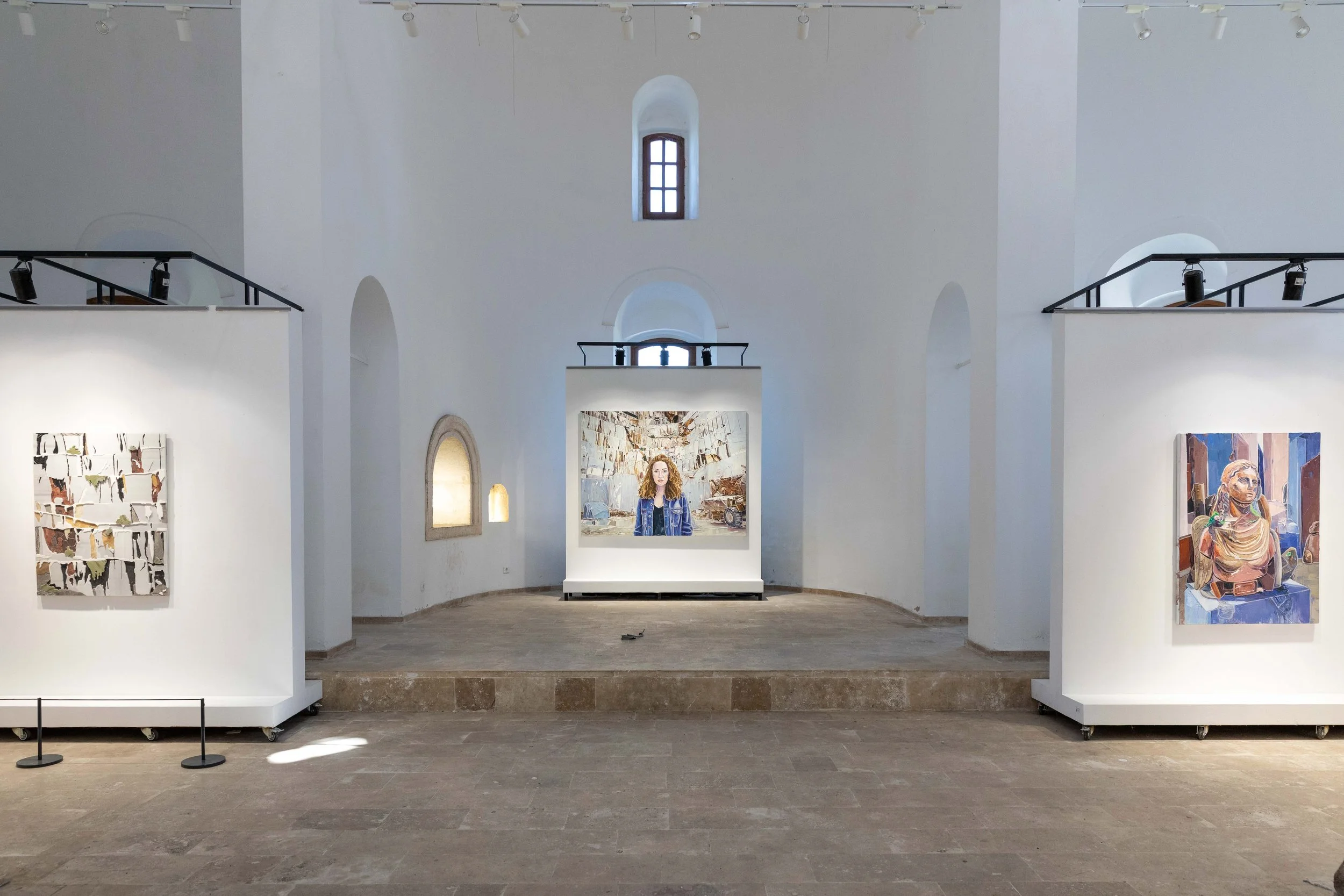
This act of tracing becomes a consideration of the destruction of nature in The Mountains Have No Owners series (2013–2016), which focuses on stone and marble quarries. These works bring into view the ways in which nature is fragmented and reorganized through economic and industrial processes. Here, the mountain is not merely a geographical form; it is an entity upon which claims are made, which is transformed, and ultimately consumed. Closely observing the stark presence of marble quarries within nature gradually revealed the language of the material itself, laying the foundation for the abstractions and marble reliefs that emerged over time.
Over time, this intervention gives way to a more subtle inquiry. In the Filling the Green series (2017), the artificial landscapes that emerge alongside the destruction of nature function as a form of compensation or concealment. Green is no longer a living environment, but a filling material. This constructed synthetic nature creates the illusion of a safe space while simultaneously revealing how superficial the relationship with nature has become. References to the garden tradition suggest the historical continuity of this artificiality; the desire to control nature reappears in different forms from past to present.
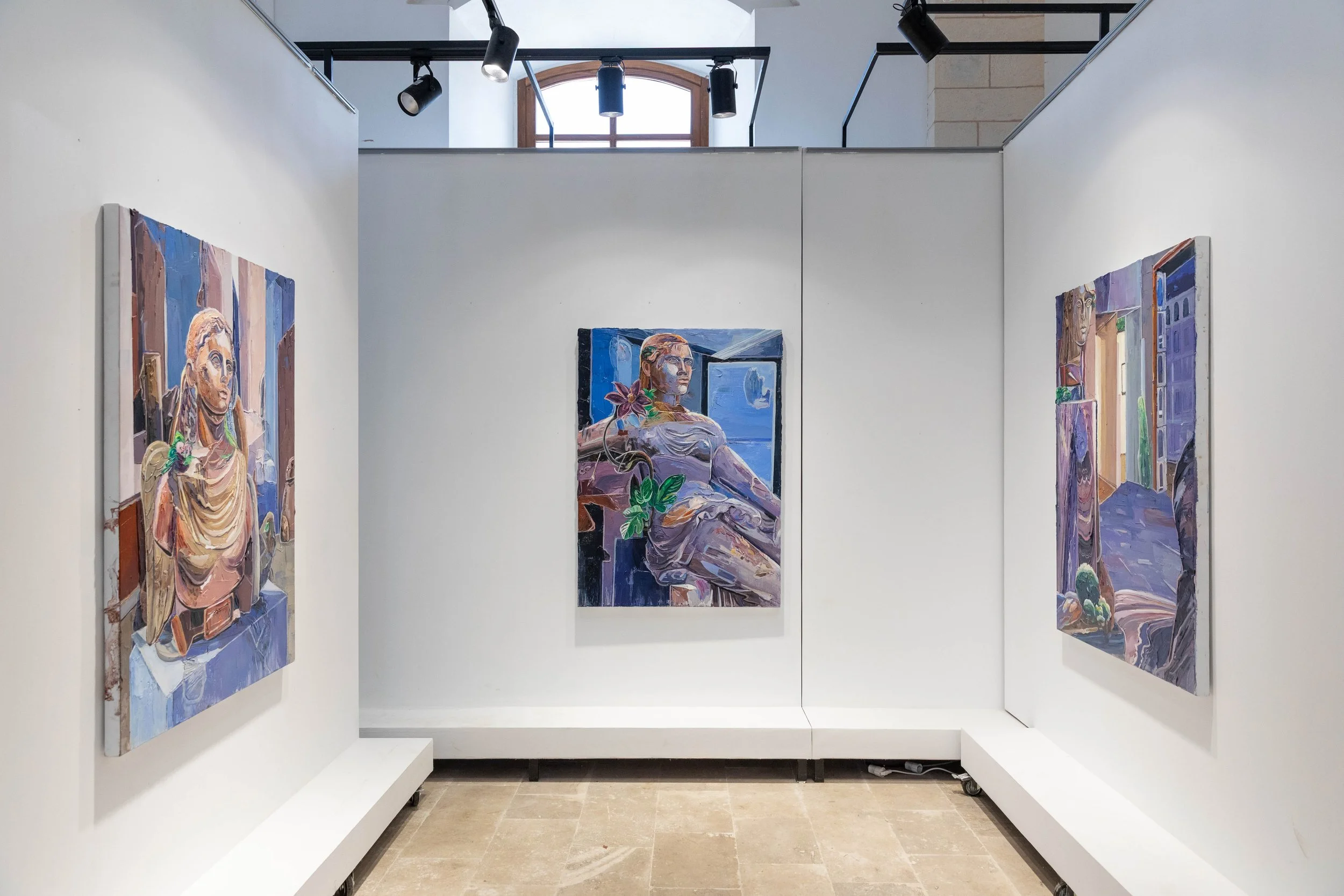
The direction that becomes apparent from this point onward is an opening toward the historical origins of this intervention. Works that turn toward antiquity, the history of marble, and the layers of cultural heritage show that the relationship established with the past is not only an aesthetic matter, but also an intellectual one. The reappearance of ancient figures in the paintings is not an act of nostalgia; it is an inquiry into how the past continues to shape the present. Cultural heritage here is not a static reference, but a field that acquires new meanings over time, transforms, and intersects with the concerns of the present.
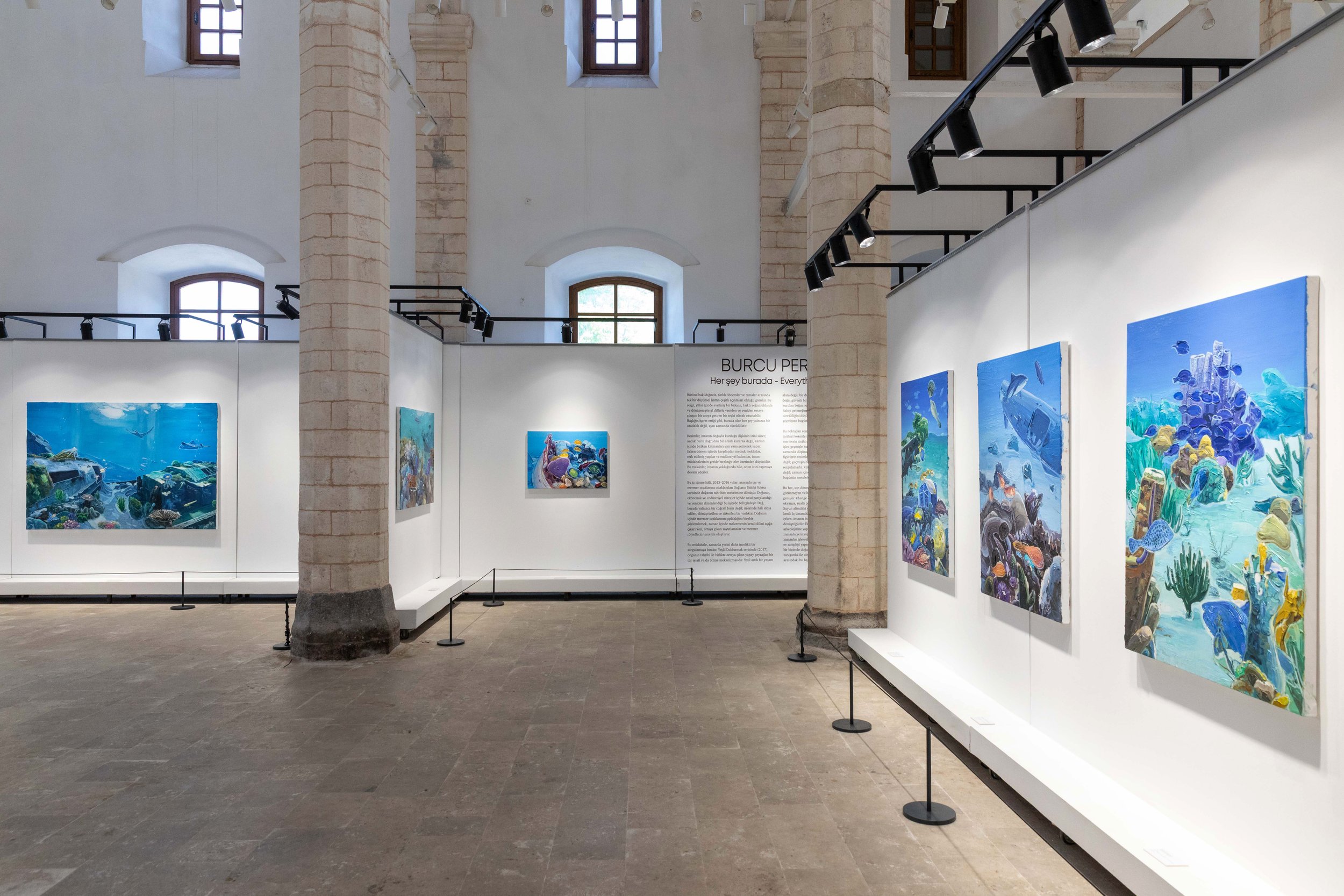
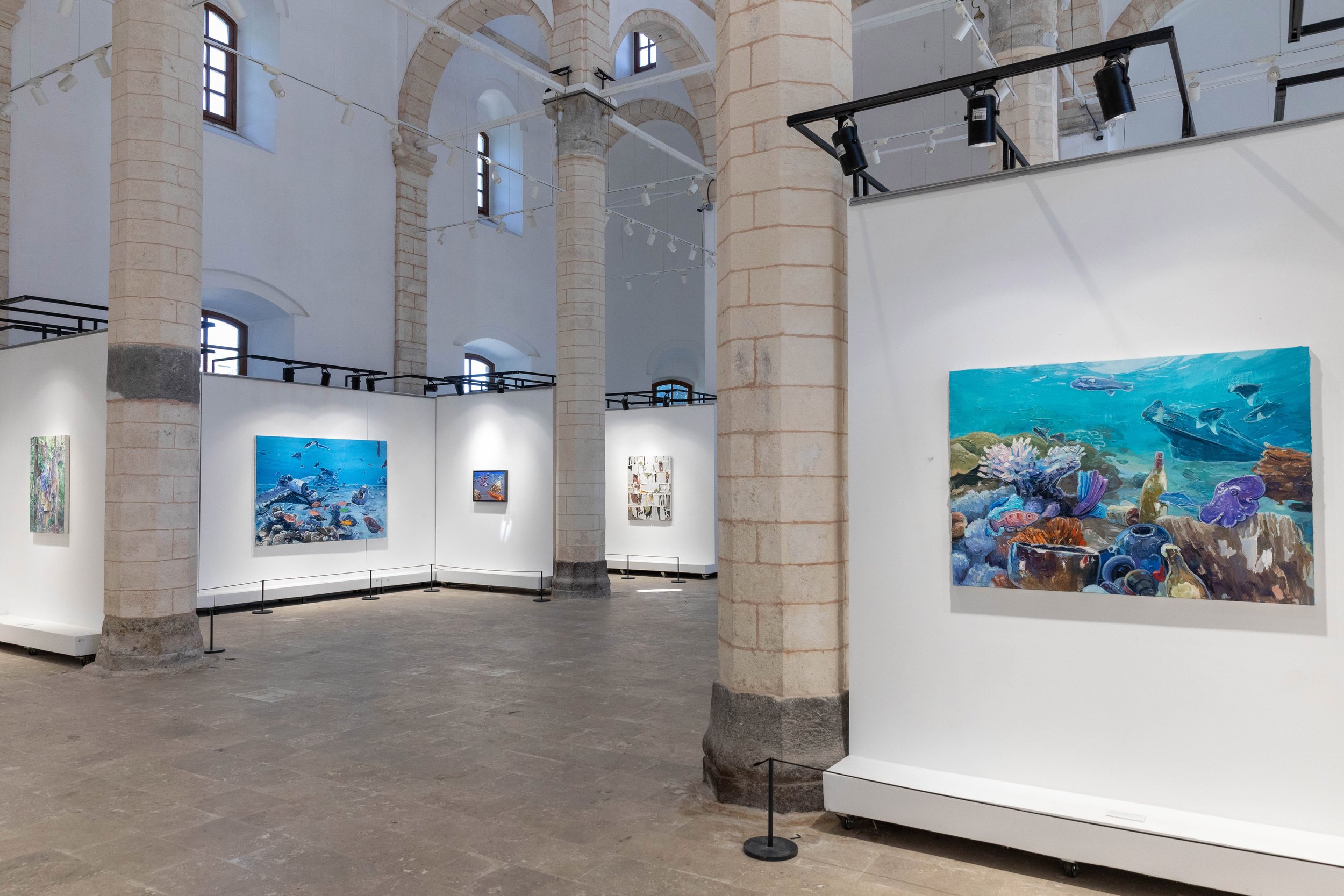
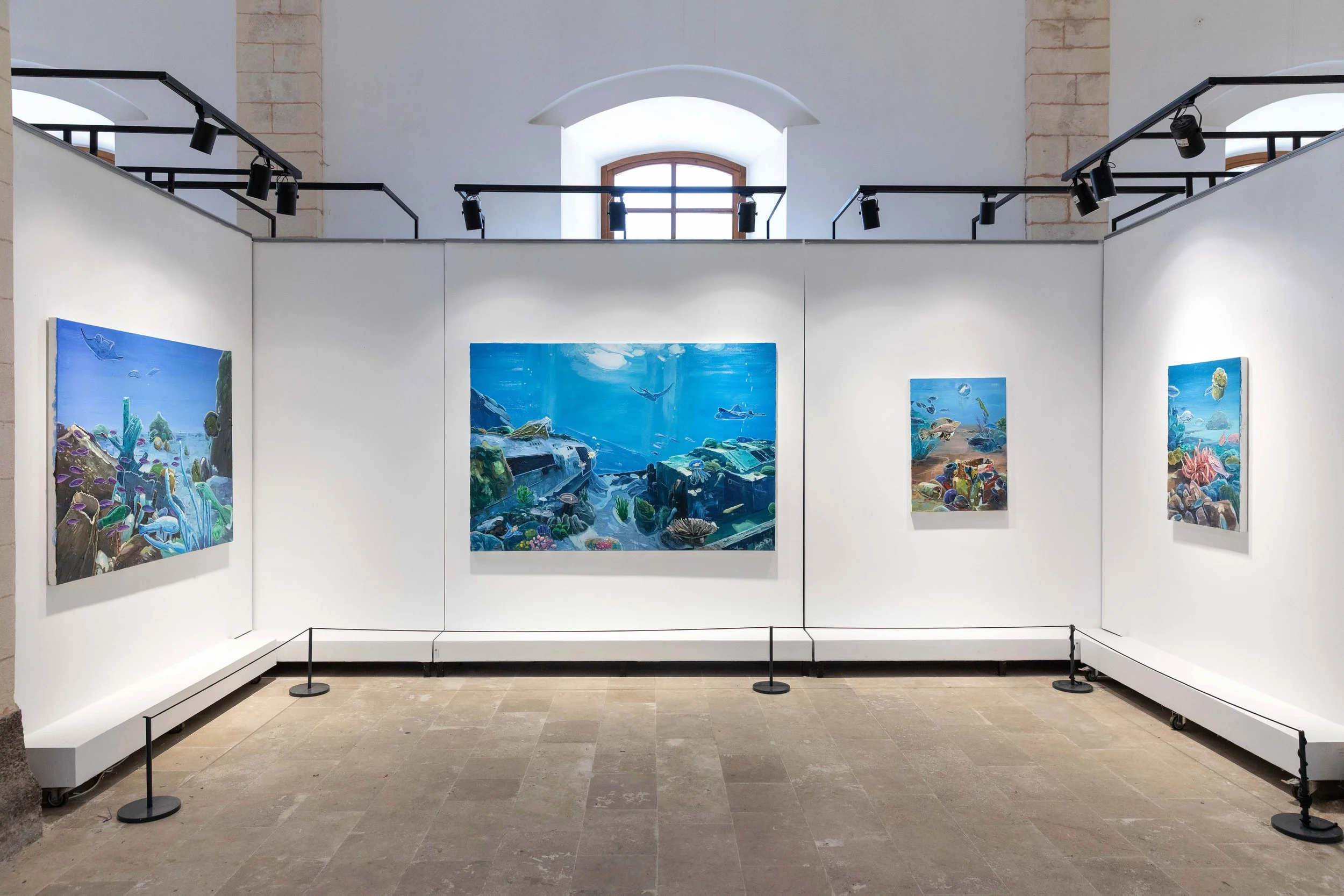
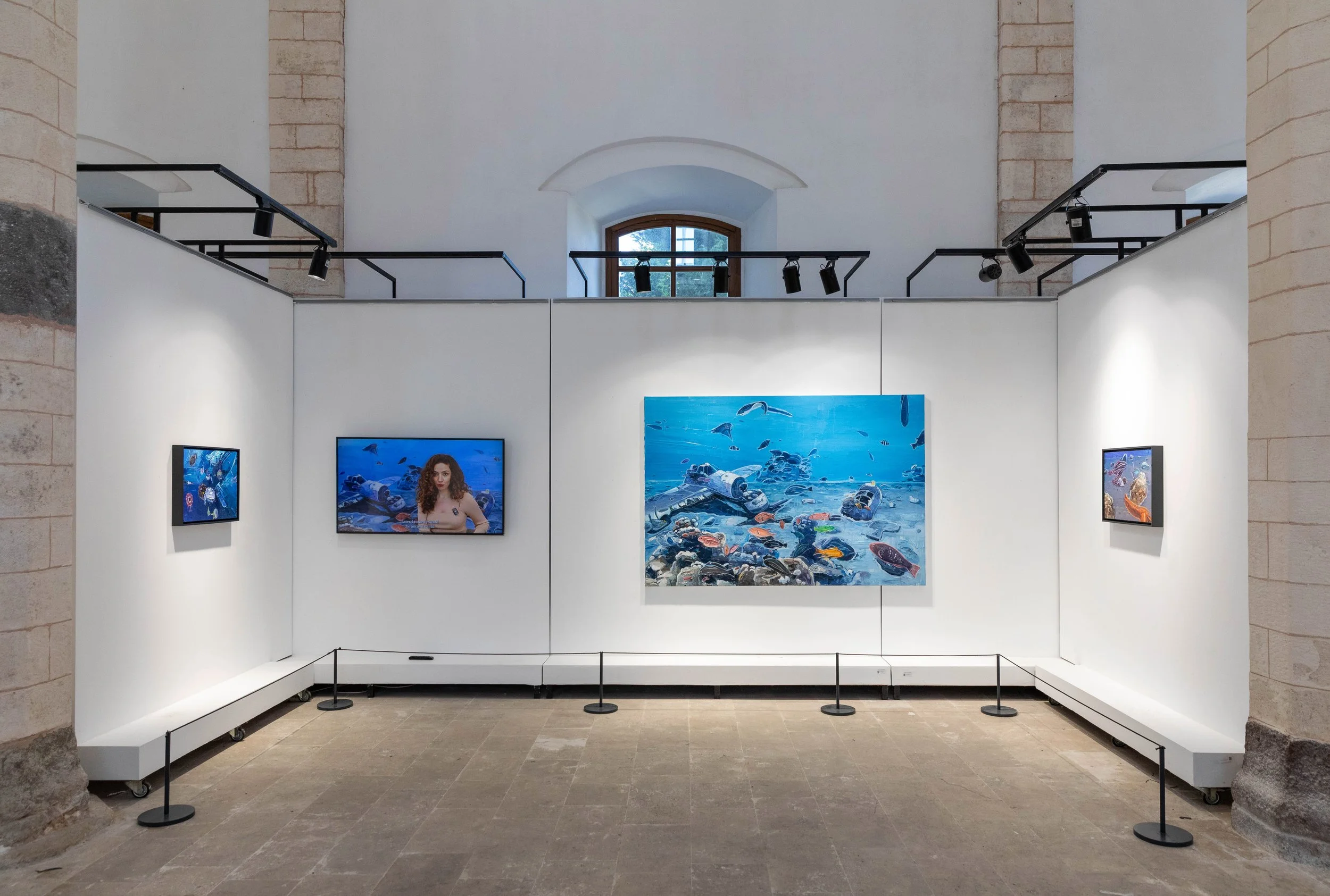
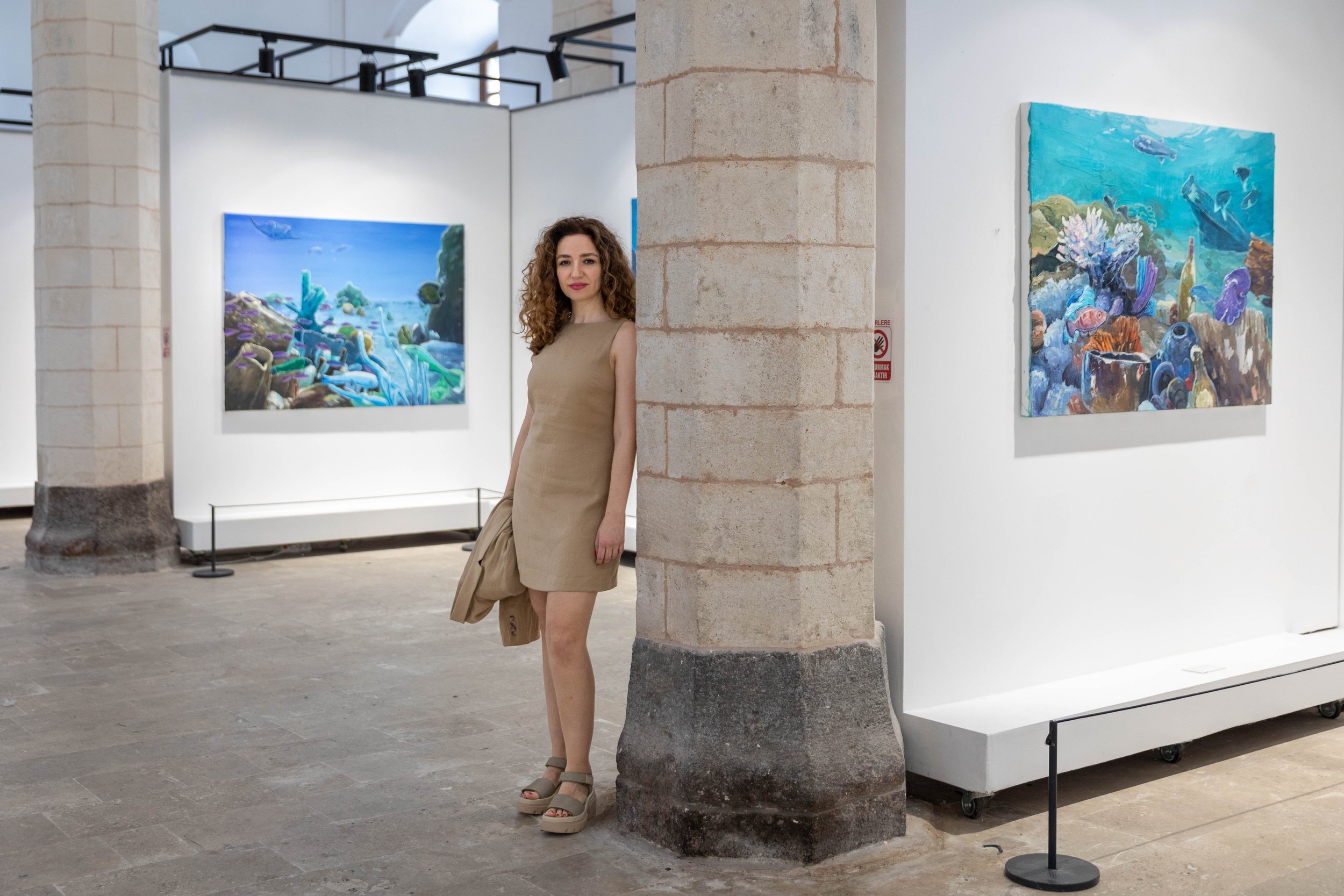
In the recent works, this line of thought takes a new direction, extending underwater toward a world that remains largely unseen and unknown. With the Change of Direction series (2025–), the ocean becomes more than an underwater landscape; it emerges as an ecological system. Life beneath the surface, through its diversity and continuity, makes visible the internal dynamics of nature itself. Yet what is most striking here is the way the traces left by humans are transformed within this system. References to industrial wrecks and underwater archaeology reveal how what was once built gradually becomes a new habitat over time. Structures that were once functional now provide shelter for other forms of life; in this way, human intervention becomes part of nature’s cycle in an unexpected way.
This connection between fragility and resilience, between disappearance and re-emergence, is one of the fundamental dynamics of the paintings.
When all of these different series come together, this practice invites us to think simultaneously about the inseparable layers of life. Nature, culture, and history are not separate from one another; they are structures that continuously come into contact, transform one another, and redefine one another. For this reason, Everything is Here is not only a title, but also a proposition: the visible and the invisible, the past and the present, the natural and the constructed exist at the same time, on the same surface.
The paintings construct this surface, inviting the viewer to move among its layers. Each work presents a complete world in itself, while at the same time gaining meaning as part of a larger whole. This wholeness cannot be reduced to a single theme; on the contrary, it expands as a field of thought opening in multiple directions.
This exhibition offers the possibility of moving through that field. Here, traces belonging to different moments in time and images belonging to different geographies and contexts come together within the continuity of a single way of seeing. And it is precisely for this reason that everything is truly here.
Burcu Perçin, 2026